

The Cycle of Violence
A pattern, not an isolated incident.
Violence in an intimate or family relationship is often not a single incident. It can follow a repeating pattern that makes it harder to recognise, harder to leave and more dangerous over time.
What is the cycle of violence
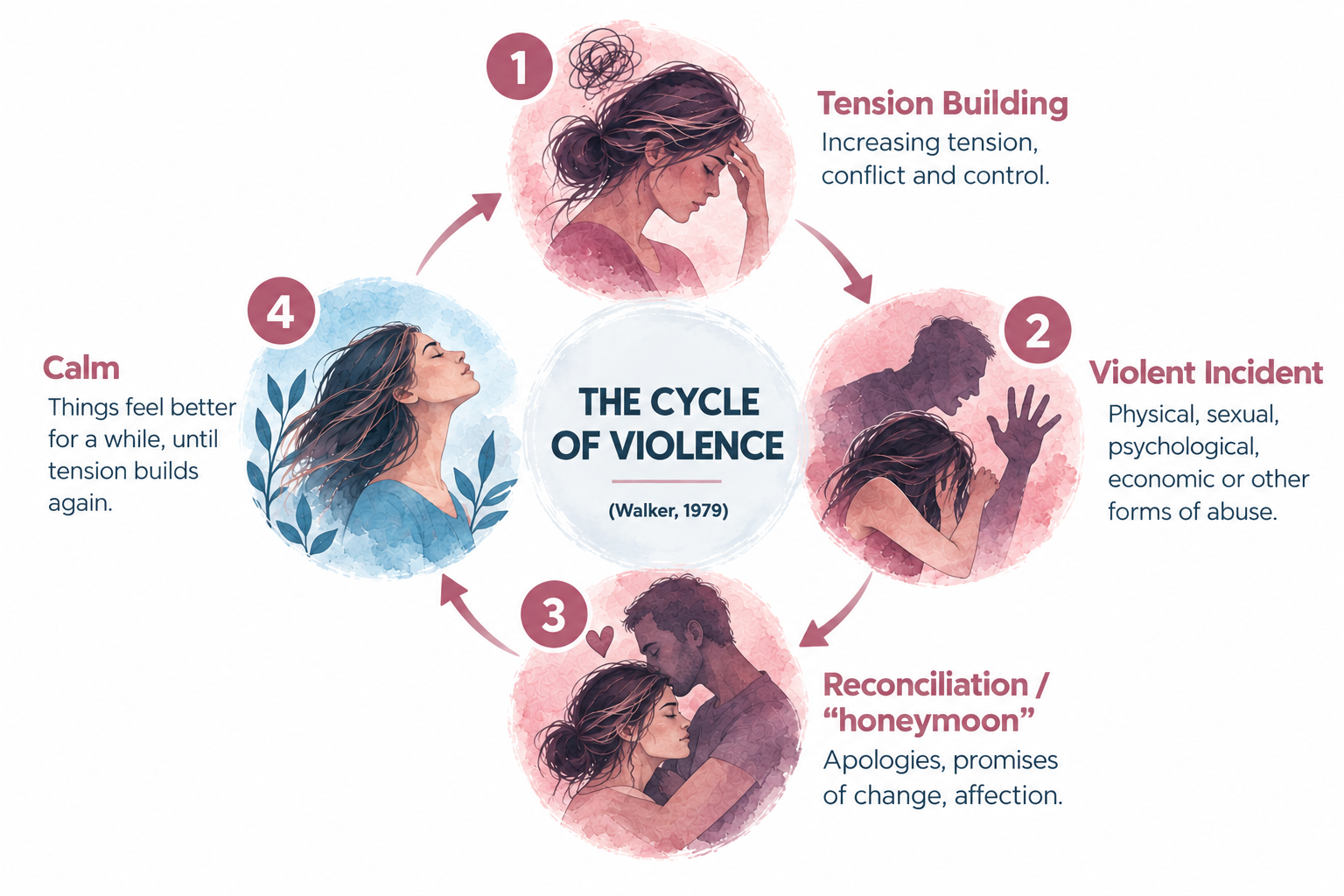
The cycle of violence describes a repeated pattern of behaviour that often occurs in abusive relationships. It can include a build-up of tension, a violent incident, a period of apology or “honeymoon”, and then a return to tension.
Each cycle can become shorter, more intense and more dangerous over time.
Understanding the cycle can help you recognise abuse, assess risk and take steps towards safety.
Important to Know
- The “honeymoon” phase can create hope that the violence will stop.
- The cycle often repeats, with incidents becoming more frequent and more severe over time.
- The cycle can occur in relationships of any gender and can also be present in other forms of abusive relationships, including within families.
Learn more about the cycle
The cycle of violence is commonly described as a recurring pattern that can develop in abusive intimate or family relationships. The phases are not experienced in exactly the same way in every relationship, and they may change or disappear over time.
1. Tension BuildingTension gradually increases. The abusive partner may become increasingly critical, jealous, irritable or controlling. The other person may feel anxious, become highly alert to changes in mood, or try to avoid conflict.
2. Violent IncidentTension escalates into an episode of abuse. This may involve physical, sexual, psychological, emotional, economic or digital violence, as well as threats, intimidation, coercion or destruction of property.
3. Reconciliation or “Honeymoon”The person who has used violence may apologise, promise that it will not happen again, express affection, minimise what happened, blame stress or other circumstances, or promise to change. This can create renewed hope that the violence has ended.
4. CalmA period of relative calm may follow. The relationship may appear to return to normal and earlier promises may be kept for a time. Gradually, however, tension may begin to build again.
Important: The cycle is a tool for understanding patterns, not a rigid rule. Some abusive relationships do not follow all four phases, phases may overlap or disappear, and violence can become more frequent or severe over time.
Based on Walker's Cycle of Violence model (Walker, 1979).
Leaving an abusive relationship is often far more complex than simply deciding to leave. A person may face multiple, overlapping barriers, and the period around separation can also involve increased risk.
FearFear of further violence, threats, stalking or retaliation can make leaving extremely difficult. A person may also fear harm to their children, relatives, pets or other people they care about.
ChildrenConcern for children can strongly influence decisions about leaving. A parent may worry about children's safety and wellbeing, custody or contact arrangements, disruption to their lives, or threats involving the children.
Financial DependenceLimited access to money, employment, housing or other resources can make leaving feel impossible. Economic abuse may also have deliberately created or reinforced this dependence.
Emotional BondsLove, attachment, hope that the person will change, guilt or shame can create powerful and conflicting emotions. Periods of reconciliation or calm may reinforce the belief that the violence has ended.
IsolationAbusive partners may gradually isolate a person from family, friends and other sources of support. This can leave someone feeling that they have nowhere to go or no one they can safely ask for help.
Practical BarriersHousing, immigration status, language, disability, access to transportation, employment, healthcare or simply not knowing where to seek help can all create additional obstacles.
Difficulty leaving should never be interpreted as evidence that the abuse is not serious. Understanding these barriers is essential to providing safe, respectful and effective support.
Violence does not always remain at the same level. In some abusive relationships, incidents may become more frequent, more severe or less predictable over time.
How escalation can occurAs the pattern develops, periods of calm may become shorter or disappear altogether. Controlling behaviour, threats, intimidation, stalking or other forms of abuse may intensify, and the person experiencing violence may have increasingly limited opportunities to seek help or leave safely.
Signs of increasing risk can include:
- Violence becoming more frequent or severe
- Increasing threats, intimidation or coercive control
- Strangulation or choking
- Threats involving weapons
- Threats to kill the victim, children, relatives, pets or oneself
- Increasing stalking, surveillance or monitoring
- Escalating jealousy or possessiveness
- Violence or threats associated with separation or attempts to leave
- Increasing isolation from family, friends or support services
Attempts to end a relationship may challenge the abusive person's control. In some cases, violence, stalking, threats or harassment may intensify during or after separation.
Changes in the pattern of violence should be taken seriously. Risk assessment and safety planning can help identify immediate concerns and support decisions about the safest next steps.
The cycle of violence can be difficult to recognise, particularly when abusive behaviour develops gradually or periods of violence are followed by affection, apologies or calm.
Signs you may be experiencing a pattern of abuseYou may notice that you:
- Change your behaviour to avoid making your partner angry
- Feel that you are constantly “walking on eggshells”
- Become anxious when you notice changes in your partner's mood
- Are increasingly isolated from family, friends or other sources of support
- Have less control over money, work, communication or everyday decisions
- Experience repeated criticism, humiliation, threats or intimidation
- Are monitored, questioned or required to account for where you are and whom you speak to
- Experience apologies or promises of change after abusive incidents, followed later by renewed tension or abuse
- Feel increasingly afraid of what might happen if you disagree, resist or try to leave
You may notice changes such as withdrawal from friends or family, unexplained anxiety or injuries, increased isolation, frequent monitoring by a partner, sudden financial difficulties, or significant changes in behaviour.
Avoid pressuring the person to leave or making decisions on their behalf. Listen without judgement, take their concerns seriously and help them access appropriate support when they are ready.
Recognising a pattern does not require waiting for physical violence. Psychological abuse, coercive control, economic abuse, stalking, sexual violence and digital monitoring can all form part of an abusive relationship.
Why it’s hard to leave
Leaving an abusive relationship can be very difficult. Many factors can make it harder to recognise the abuse, seek help or take the first steps to leave. These can include fear, worry about children, financial dependence, emotional bonds, isolation and practical barriers. The cycle often creates hope that the violence will stop, but it usually repeats and can become more frequent and severe.

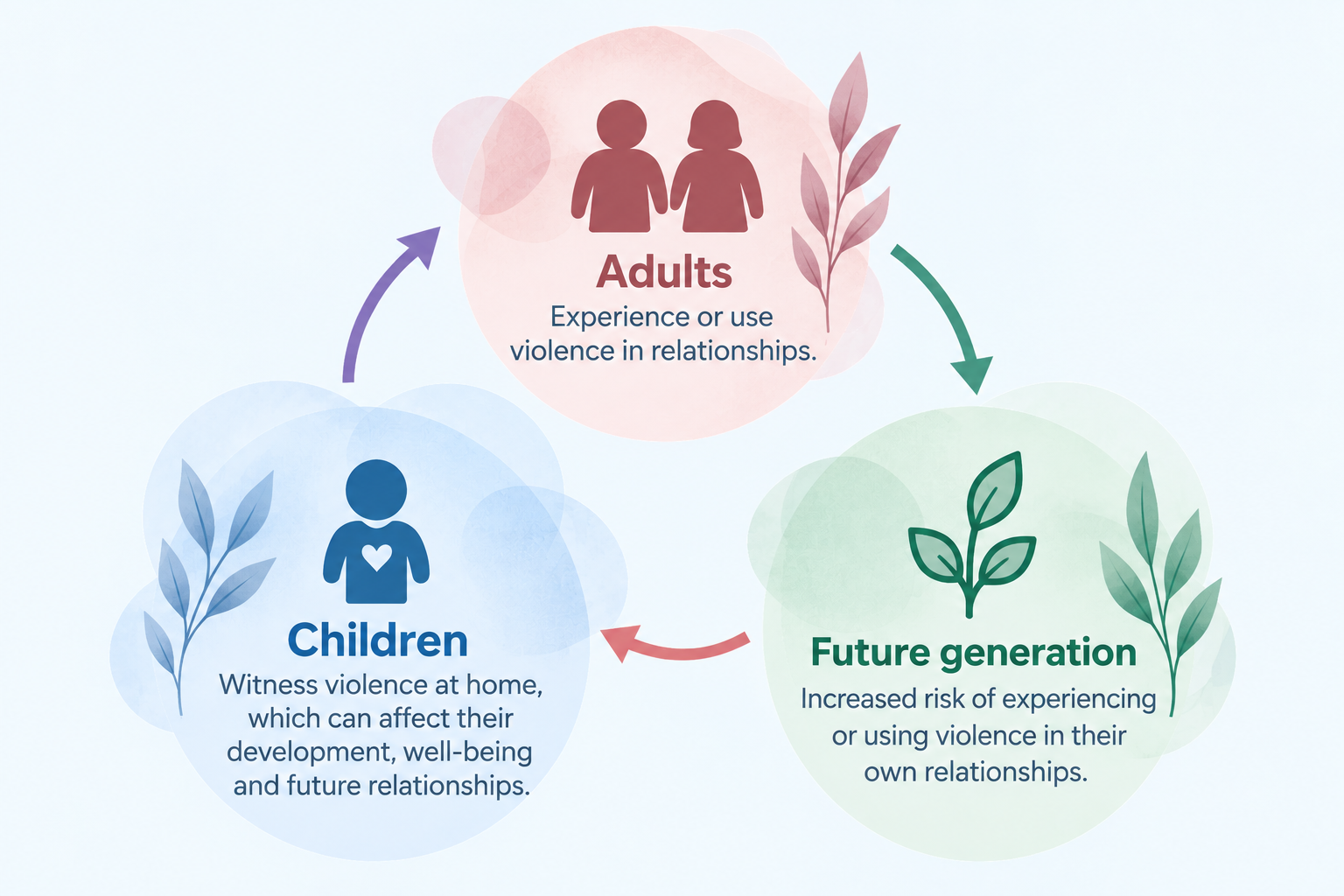
The intergenerational cycle of violence
Violence is learned – but it can be unlearned.
Children who grow up witnessing violence at home are at increased risk of experiencing or using violence in their own relationships later in life.
Experiencing violence in childhood does not mean that a person will experience or use violence as an adult; the cycle is not inevitable.
Exposure to violence can affect a child’s emotional, social and cognitive development, shaping how they think, feel and relate to others. However, with the right support, this cycle can be interrupted.
Ways to Break the Cycle
You are not alone
If you are experiencing violence, or are worried about someone else, we are here to support you.
What is Gender-Based Violence?
Definition, forms, legal framework and impact.
Legal Framework & Victims’ Rights
National and EU legislation, and your rights.